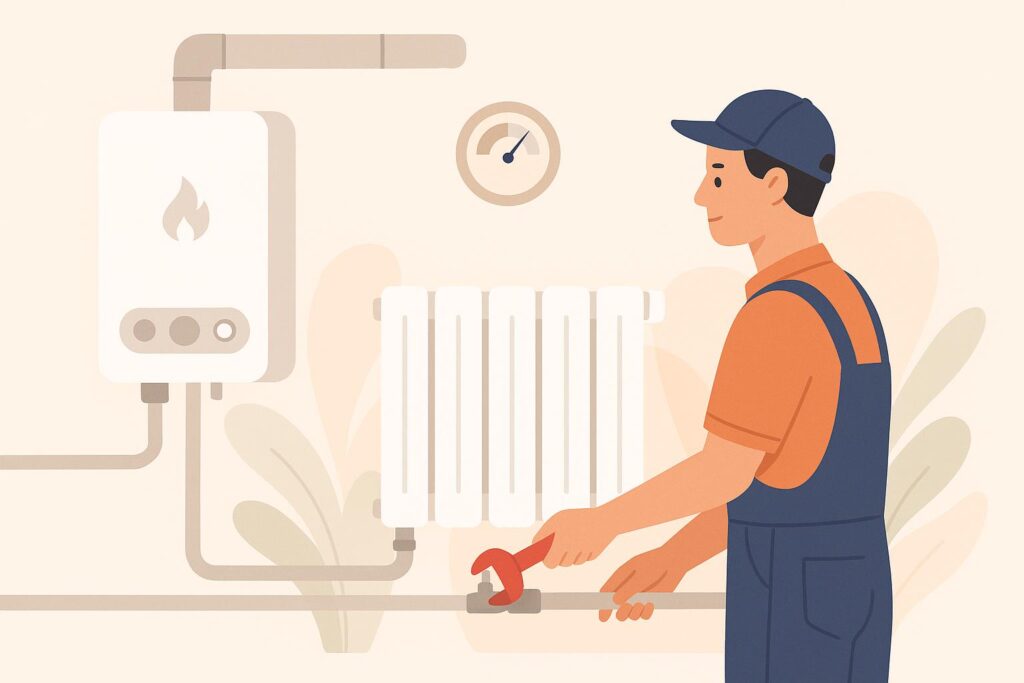
If you’re looking into central heating installation in Hull or nearby areas, you’re probably either fed up with an unreliable old system or moving into a property that’s never had proper heating fitted. We see both situations all the time. Older terraces off Beverley Road with outdated back boilers. Landlords modernising rentals in East Hull. Families renovating in Kingswood and wanting something efficient and future-proof.
Whatever the reason, knowing what actually happens during a new heating installation makes the whole process far less daunting. In this guide, I’ll walk you through the types of systems available, what the install involves, typical timescales and the questions we’re most commonly asked.
Choosing the Right Central Heating System
Before anything gets fitted, the most important decision is the type of system that suits your property. There’s no one-size-fits-all answer. It depends on the size of your home, hot water demand, existing pipework and whether it’s a rental or long-term family home.
Combi Boilers
Combi boilers are the most common upgrade we carry out across Hull. They provide heating and hot water directly from the mains, so there’s no separate hot water cylinder or cold water tank.
They work well in smaller to medium-sized homes with one bathroom. If you’re in a typical two or three-bed semi in areas like Sutton or Anlaby Road, a combi is often ideal.
Pros:
- No tanks taking up space in the loft
- Hot water on demand
- Neater overall system
Considerations:
- Water pressure must be decent
- May struggle if multiple showers run at once
System Boilers
A system boiler uses a hot water cylinder but doesn’t require a tank in the loft. These suit larger homes or properties with higher hot water demand.
Landlords with bigger HMOs in Hull sometimes go this route, especially if there are two bathrooms. You can run more than one tap or shower without a big drop in pressure.
Regular (Conventional) Boilers
These are more traditional setups with both a cylinder and a loft tank. We usually only replace like-for-like if the property layout makes changing difficult or expensive.
In some of Hull’s older properties, pipework routes and low mains pressure mean keeping a regular system can make practical sense.
What Happens During a Central Heating Installation?
This is the bit most homeowners want clarity on. How disruptive is it? How long will we be without heating? What gets ripped out?
1. Initial Survey
Any reputable heating installers that Hull homeowners use should carry out a proper survey. We’ll measure rooms, check insulation levels, assess radiators and test water pressure.
We also look at things you might not think about, like access to under-floor pipe runs in older Victorian terraces. Some floorboards lift easily. Some haven’t moved in 60 years.
2. Removing the Old System
On installation day, the old boiler, radiators and any redundant pipework are safely removed. Dust sheets go down. We isolate gas and water supplies properly.
If you’ve got an old back boiler behind a fireplace, that’s usually a bit more involved.
3. Installing Pipework and Radiators
In a full central heating installation in Hull properties that have never had it before, new pipework is routed throughout the house. Radiators are positioned based on heat loss calculations, not just where they look neat.
We often get asked if pipes can be hidden. In most cases, yes. Under floors or boxed in tidily along skirting. Every house is different.
4. Fitting the Boiler
The new boiler is mounted, connected to the gas supply, water and heating circuit. Modern systems also include filters to protect the boiler from sludge. Power flushing or system cleaning is carried out where needed.
5. Testing and Handover
Before we leave, the system is fully tested, balanced and commissioned. Controls are set up and we show you how everything works. This is usually when customers start asking practical questions like “What temperature should I actually set this to?”
How Long Does Installation Take?
Timescales vary depending on the scope of work.
- Boiler swap only: usually 1 day
- System conversion: 2 to 3 days
- Full new central heating installation: 3 to 5 days
Older Hull properties can add time if access is tricky or floors need careful lifting. We always allow realistic timeframes rather than rushing.
What About Costs?
Costs depend on system type, boiler model, number of radiators and complexity of pipework.
As a general guide:
- Boiler replacements are typically less than full system installs
- Converting from regular to combi costs more due to additional work
- First-time installations are the most labour-intensive
We always work from a detailed written quote rather than vague estimates. That way, landlords and homeowners know exactly what’s included. No surprises halfway through the job.
Common Questions We Hear
Will I be without heating for long?
Usually only during working hours while the system is being fitted. We aim to have heating operational as quickly as possible, especially in winter.
Do I need new radiators?
Not always. If they’re modern and sized correctly, they can sometimes stay. That said, upgrading often improves efficiency and heat output.
Is it worth upgrading controls?
Absolutely. Smart thermostats and zoned heating can make a noticeable difference to running costs. Particularly useful for landlords wanting better energy ratings.
Will this improve my EPC rating?
In most cases, yes. A modern A-rated boiler with proper controls is more efficient than older systems, which can be important if you plan to let or sell.
Choosing the Right Heating Installers in Hull
This is where experience really matters. Proper sizing, neat pipework, correct commissioning and attention to detail make a big difference to how reliable and efficient your system is long term.
Look for Gas Safe registration, clear written quotes and installers who are happy to answer practical questions. If someone rushes the survey or gives you a price without really looking at the property, that’s usually a red flag.
A well-installed system should run quietly, heat evenly and give you years of reliable service with routine maintenance.
Final Thoughts
A new central heating installation in Hull is a significant investment, but done properly, it improves comfort, efficiency and property value straight away. Whether you’re upgrading your own home or bringing a rental up to standard, getting clear advice from experienced heating installers in Hull can make all the difference.
At AGS, we carry out central heating installation work across Hull, Goole, Grimsby, Scunthorpe, Bridlington or Beverley AGS takes the time to survey properly, explain your options clearly, and install systems built to last.
If you’re ready to move forward or simply want honest advice about your options, the next step is simple. Get a central heating quote